The Infinite Wall

I - only I - the Nothing and the Infinite in one. Climbing the infinite wall.

Wednesday, January 03, 2007

The Infinite Wall

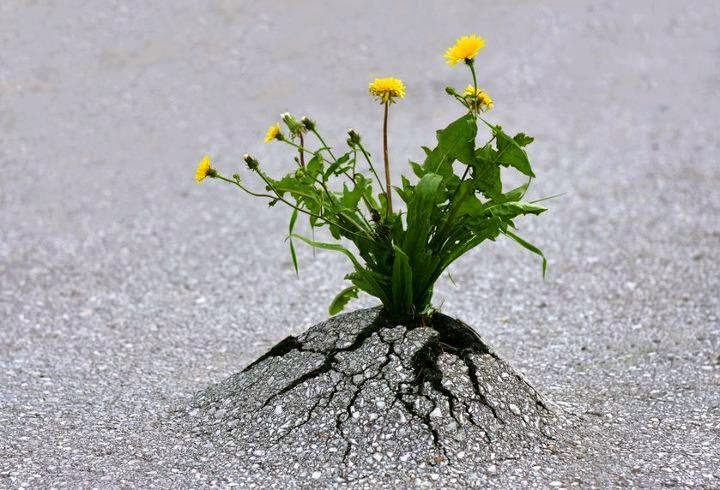
I've been asked why I call my blog The Infinite Wall. The reasons are several fold, and the first thing I want you to do before I start explaining is to conjure up an image: You are in a landscape taken from a classic Chinese painting, with parabolic mountains, trees and not the least fog and clouds. Ahead of you is something that looks like a cliff wall on one of those parabolic mountains, except it keeps going on and on into the sky - and an ominous shadow on the third layer of thin clouds above you somehow tells you that this wall never stops rising. It is an infinite wall.

Some of you know I climb, and may have guessed that this wall represents and poses a challenge, a challenge which is intimidating, yet tempting to take on and promising the kind of joy only challenges can bring, but then yet again ultmately promising failure, since no amount of climbing can get you to the top of an infinite wall. Unless, of course, you are following mathematician Rudy Rucker through the White Light, halving the time taken to climb a unit for each unit climbed. But I am giving away too much too soon.

I am a mathematician, and mathematics fascinates me not just in terms of proofs and research, but also in a recreational way. I love to see the ideas I know from my profession used playfully, in stories, philosophy, poetry and paradox. So when you know me from the angle of mathematics, the wall fades into grey slate (or concrete) and becomes merely the outer wall of Hilbert's hotel (surely a worthy item for Math Fiction).

But neither climbing nor mathematics are the origin of the infinite wall. Its origins are hidden within the strange recesses of Eastern mysticism, ch'an (zen) Buddhism. Bodhidharma is said to have gazed at a cave wall for nine years. Though said to be historical fact, I prefer to think of the wall gazing as an enlightenment metaphor. Any physical wall then becomes representative of the obstacles to enlightenment - obstacles that are perhaps identical to enlightenment itself. But the metaphor as metaphor for enlightenment becomes more transparent if we view the wall as being infinite. For in the tradition of instant enlightenment you are equally far away from enlightenment regardless of your practice; when you climb an infinite wall in discrete steps, only an instant and infinite jump can bring you to the top, regardless of how high you have climbed. When the wall is infinite, we see non-paradoxically that though practice does not bring you closer to the goal, it nevertheless has merit in lifting you higher off the ground.

So how do you scale this infinite metaphor, this wall? And why should you bother? These questions go together, in the spirit of not separating the goal and the road taken to get there. To answer the latter first: there is no should; you either choose to start climbing or you don't. If you climb because you somehow feel obligated to do so, you are better off doing something else you would enjoy more in our Chinese landscape, like going fishing. I bet there are wondrous carp in the ponds that are bound to inhabit a Chinese landscape.

Imagine the top of this infinite cliff. That is: Cliff's foot, lots of fog, more fog, ... fog fog fog in a double infinity ... some more fog, above the clouds, and there you are at the top of the infinite cliff wall. It's not very special, is it? Aside from the view, of course. It's solid ground. Rock. Just like at the top of any mortal cliff. There is no difference. What differs is not the top, but the stretch between it and the bottom. It's this stretch which comprises the infinity that makes the top special. The goal - the top - is nothing without the means, the wall itself.

Maybe some of you will now mutter something about "infinite fog" and "mystical mumbo-jumbo". You are more right than you think, but the infinite fog is not an indictment of the infinite wall, but part of what makes it interesting: you are never really able to see the whole wall as you climb, something the infinite layers of fog ensure in the metaphor and time and the limits of the mind itself ensures in concrete life itself, which is in the end what this is all about. Life, as seen through the eyes of a single man who loves his mathematics, climbing and meditation. Life, as seen through the eyes of a concrete man who has a family he dotes on - a beautiful wife and two daughters who consider pink to be the prettiest colour and "princess" to be the highest honorary title - a job, a loan and a slightly crooked index finger too often forced into the service of typing in a search for perfection.

Thursday, November 30, 2006


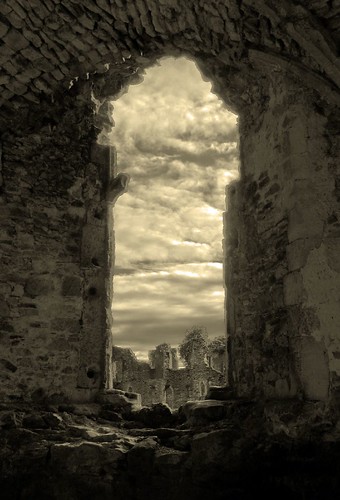
One of these rare pictures that fill you with a sense of wonder and - curiously enough - a strong desire that there should be fairies. The strange light promises to be even stranger when you walk through that portal; maybe it will be like Sebastian's journey in The Never-ending story (great book; horrible movie), or maybe Greg Bear's Sidhe are waiting for the unsuspecting traveller at the other side. Or maybe it is Mythago wood where you meet what your wishes and fears conjure up. Enter and see.

Wednesday, October 25, 2006

Mathematics is beautiful in itself; it is delightful when a piece of a structure falls into place, like when you understand or prove certain theorems. But mathematics can be beautiful in a more prosaic way, too, via being used as a tool to generate art of a visual or auditory kind. Fractal images have a special place in the pantheon of art derived from mathematics; I will in particular recommend the gallery I lifted the above image from, as the pictures are of exceptional high quality. Click the image, and enjoy!

Tuesday, October 17, 2006

Choose

The individual has always had to struggle to keep from being overwhelmed by the tribe. If you try it, you will be lonely often, and sometimes frightened. But no price is too high to pay for the privilege of owning yourself. --Nietzsche

Tuesday, October 10, 2006

Paul Halmos, R.I.P.

Paul Halmos, author of some wonderful mathematical textbooks and the essay any student should read before even starting on their thesis, How to Write Mathematics, died on the 2nd of October. Short accounts of Halmos' life and works can be found here and here. An interesting man. I have asked the college library to buy his "automathiography" (a biography solely devoted to his professional life as a mathematician) I Want to Be a Mathematician, and look forward to a good read.

Tuesday, June 27, 2006

The Big Bounce

Interesting new findings in physics suggest that the universe did not start in a Big Bang, but rather is cyclical with at least one Big Bounce. Read more to find out. For my own part, I find that model more aesthetically pleasing than the plain Big Bang theories. And aesthetics matters. The ramifications may be interesting; not the least, they may unsettle the seeming current consensus which has the universe exploding at increasing speed by the help of "dark energy". For the Bouncing Universe theory suggests that the Big Bounce we know the Bang side of wasn't singular, again implying that our universe will ultimately have to go through a Big Crunch before it bounces off into a new Big Bang. Getting all sci-fi here ... The result I linked to above was calculated using a special version of quantum mechanics which I honestly don't know too well. Well, not at all, really. It seems to involve space being woven by some kind og one-dimensional quantum threads. We tend to understand by building models from what we already know, and so I immediately thought of information flowing around on a graph. What are the chances of preserving structured information (there's some redundancy for you) on that graph as it writhes through the Big Bounce? More precisely: What are the chances of preserving the kind of information structure that makes up consciousness through such a Big Bounce? And when will we see the first sci-fi / cyberspace novel depicting such an event?

Friday, June 23, 2006

Mathematical meanderings

The corridors of the math building at Blindern - the University of Oslo, where I did my studies - had acquired a new layer of that subtle shade of grey that is the look of wear. They looked tired, and the doors more so than the walls. This despite attempts at freshing up these seventies constructions with funky glass walls (and doors), or rather in part because, since the contrast did not serve to envigorate the old. Not a place where you would expect anyone to smile. Yet, there I arrived, knocking on my old thesis advisor Tom Lindstrøm's door; he greeted me the way his friendly old self always had. Nothing changed. Well ... he too had been tinged by grey, but unlike with the corridors, this affected his hairstyle only and not his character. It had been quite some time since last we talked, and we had an enjoyable update chat. Then, work: I was there with the business purpose of being the external examiner for a Master thesis within what I consider my area of mathematics. I won't delve into details, but the candidate first held a well prepared 45-minute presentation of his work, and after a little recess we examined him about his thesis. It was interesting to see the exam situation from "the other side of the table". Students know it instinctively, and it really is true: The harder the questions, the higher the grade they are considering you for. In short: Easy questions probe down, hard questions probe up. After the examination, the candidate went to celebrate his newly acquired title of Master of Science with his fellow students, and Tom and I were joined by my academic sister Klara Hveberg for lunch. Well, a very extended lunch and academic talk. Klara was the same sprightly person she was at the Abel prize ceremonies. After lunch, Klara gave me a brief walk-through of her thesis. A well-written one, btw. Yours truly has lately had to face that while his own thesis may have contained good ideas, the notation is in places quite "mannevond" (vicious); such are the perils of converting a thesis into papers. News from the math community ... Keith Stroyan has received an award for outstanding teaching. Keith is worth half a volume of anectdotes all to himself; his dog breeding, his very special sense of humor and not the least how his thin Scottish ancestry (Strauan) made him more scottish than any Scot at an Edinburgh conference on Non-standard analysis. Which brings me to ... Tom may arrange a conference on NSA in Norway next year, following up this year's conference in Pisa which I unfortunately couldn't attend. I'll make sure to attend next year, though, and have already planned a talk on diffusion on the Walsh fractal for it. Now I just need to do the math.